STRETCH
A fibre that recovers
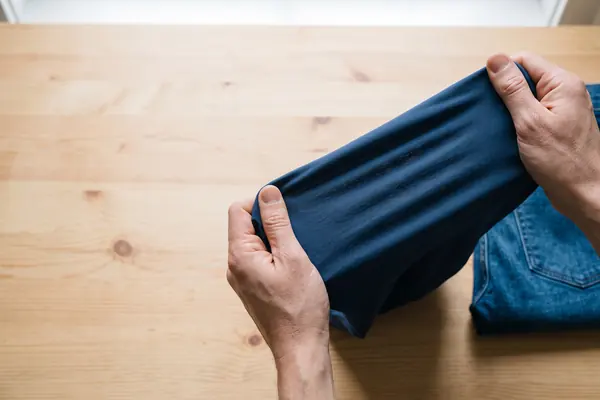
Under EU textile rules, elastane must stretch to three times its length and recover rapidly when released. That is why stretch clothes can fit closely and still let you move.
Compare the fibres skinnyweartech
00STRETCH FABRIC, EXPLAINED
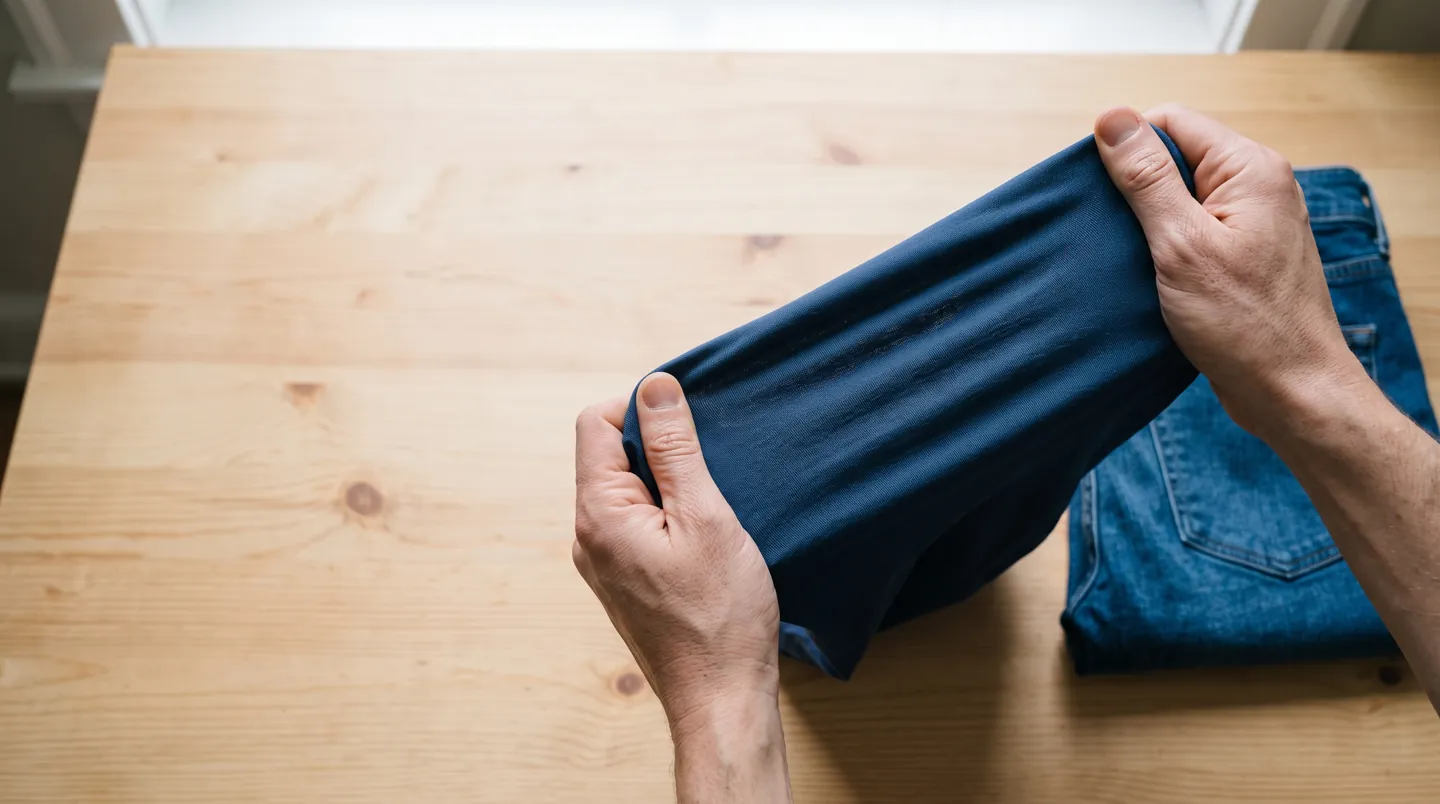
Skinny jeans, leggings and running tights all hide the same trick.
A small share of elastane, a stretchy synthetic fibre invented in 1958, lets close-fitting clothes give as you move and then return to shape. The same fibre makes them some of the hardest clothes to recycle.
Compare the fibres01Principles
02THE SHORT ANSWER
Elastane is defined by what it does.
Its stretch is also why recyclers struggle with it.
STRETCH
Under EU textile rules, elastane must stretch to three times its length and recover rapidly when released. That is why stretch clothes can fit closely and still let you move.
Compare the fibresWHAT IT IS
Both EU and US rules define it as at least 85% segmented polyurethane. In clothes it is usually a small share, wrapped inside cotton, nylon or polyester.
How it is madeRECYCLING
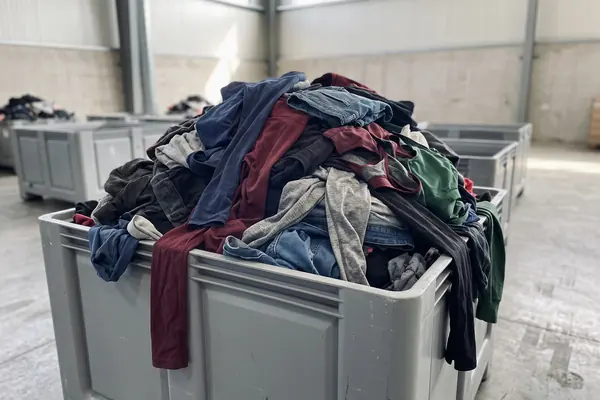
TU Wien researchers found that even a small amount of elastane clogs the shredders used to recycle textiles, so blended clothes are hard to reuse.
See the numbers03A QUICK FIBRE CHECK
Pick a fibre from the EU textile list to see the stretch-and-recover test in its official definition. The bar shows how much stretch the definition asks for.
These are the definitions used for fibre names on labels, not tests of any particular garment.
04TWO NUMBERS WORTH KNOWING
One figure from the rules that define the fibre,
one on how few clothes get recycled.
85%
Minimum share of segmented polyurethane
Both the EU fibre-name regulation and the US Federal Trade Commission's textile rules set the same floor: at least 85% segmented polyurethane. In the US the fibre is called spandex.
DEFINITION · EU AND US RULES
≈ 6%
Danish household clothes that get recycled
Aarhus University says only about six per cent of clothes thrown away by Danish households are recycled, against 32 per cent of plastic packaging, and that elastane blends are a big part of the problem.
RECYCLING · AARHUS UNIVERSITY
Aarhus University researchers separated elastane from nylon in 2023 by heating fabric to 225 °C with an alcohol and a potassium hydroxide base for just over four hours.
05FROM POLYMER TO JEANS
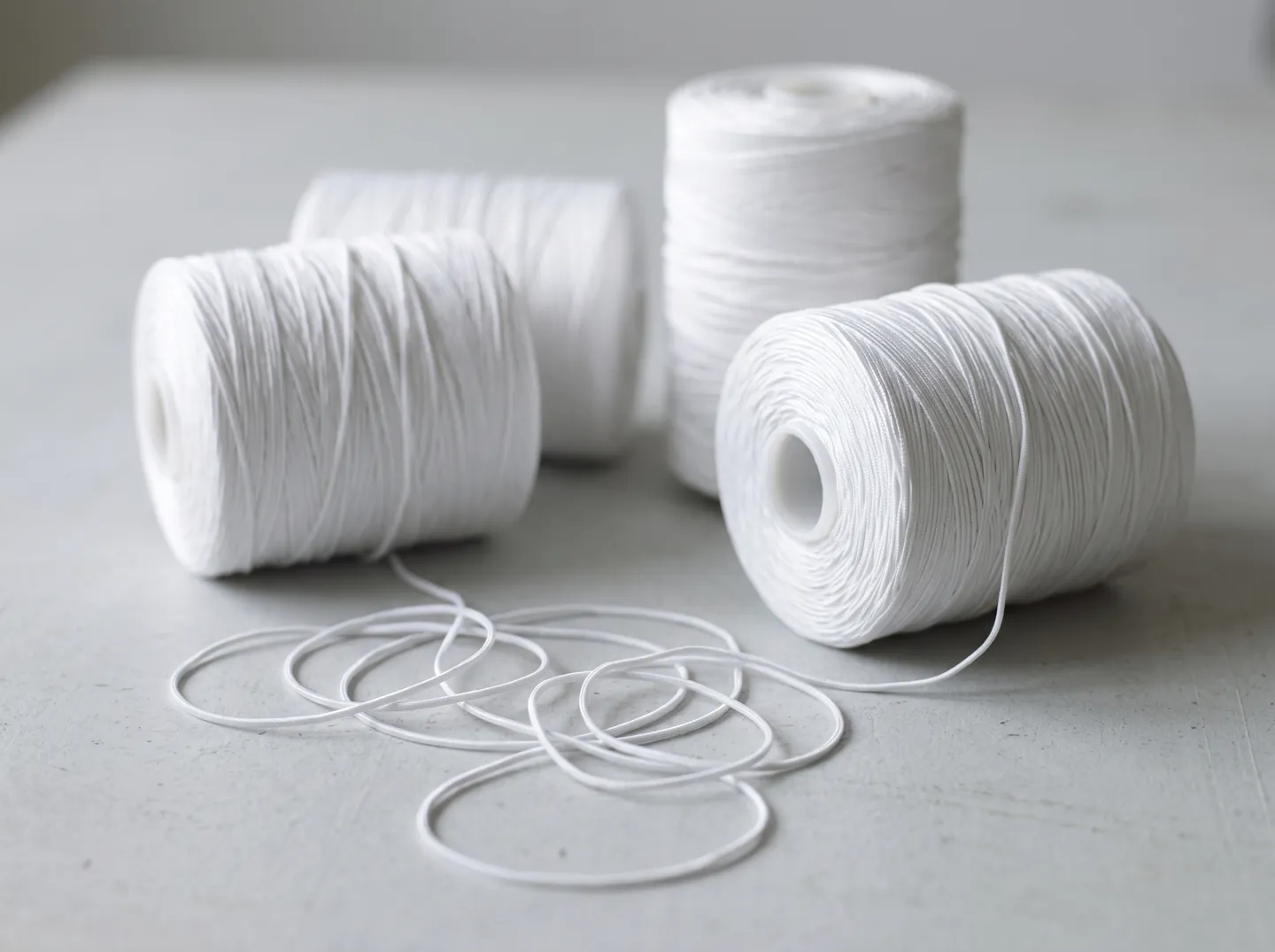
You rarely see elastane itself. It is a colourless core hidden inside the yarns you can see and feel.
A polyurethane is built from a diol and a diisocyanate, then lengthened with small linking molecules called diamines.
It cannot be melted without breaking down, so a concentrated solution is pushed through fine holes and the solvent evaporates.
Main fibres such as nylon or cotton are wound around the elastane core, so the outside looks and feels like ordinary fabric.
Elastane usually makes up a small percentage of the cloth. That is enough to add stretch and recovery.
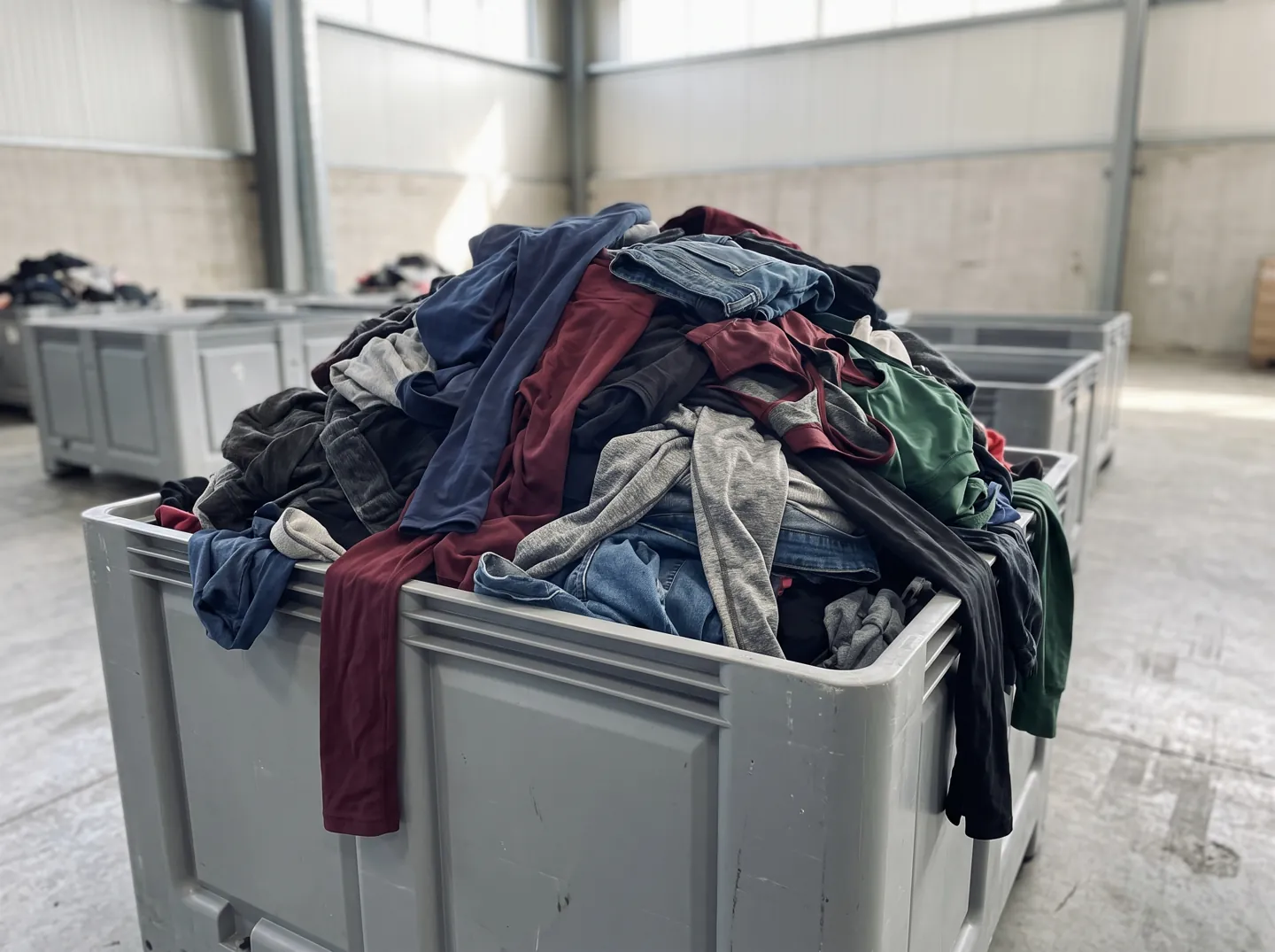
06WHY IT IS HARD TO RECYCLE
TU Wien researchers describe elastane as a machine killer: it is so stretchy that textile shredders cannot cope, and it causes soiling, blockages and clumping. Pure cotton, polyester or polyamide recycle far more easily.
Labs are working on ways to dissolve or chemically unpick the elastane and keep the other fibres. TU Wien found a solvent that removes it from polyester and polyamide; Aarhus University broke its chemical links with heat, alcohol and a base.
07Questions
Yes, broadly. Elastane is the name used in Europe and spandex the name in North America, both for a fibre of at least 85% segmented polyurethane. Shops often use trade names for the same kind of fibre.
Aarhus University and other sources credit the chemist Joseph Shivers, who invented it in 1958, after wartime work on synthetic rubber led to a range of new synthetic fibres.
By EU definition it must recover rapidly after being stretched to three times its length. Reference sources describe the fibre as stretching up to five times its length.
A small share is enough to add stretch and recovery. Because the elastane sits inside a wrapping of other fibres, the cloth keeps most of the look and feel of cotton or polyester.
It is difficult today. Even small amounts of elastane jam the shredders used in textile recycling. University teams in Vienna and Aarhus have developed lab methods to separate it.
08Sources
ABOUT THIS NAME
skinnyweartech.com is part of the DoodleSale portfolio. It isn't in an auction right now, but you can ask about leasing it.